
Climate Finance in Thailand
Recognizing the pivotal role of the financial sector in combating climate change, CFNT’s primary objective is to help catalyze impactful climate finance through solution-based research, stakeholder engagement, and network building. Our ultimate goal is to assist Thailand’s financial sector to be more responsive to the challenges of climate change. By uniting forces with like-minded partners, CFNT endeavors to help shape a financial landscape that aligns with global sustainability goals and fosters a resilient, green, and inclusive economy.

Event
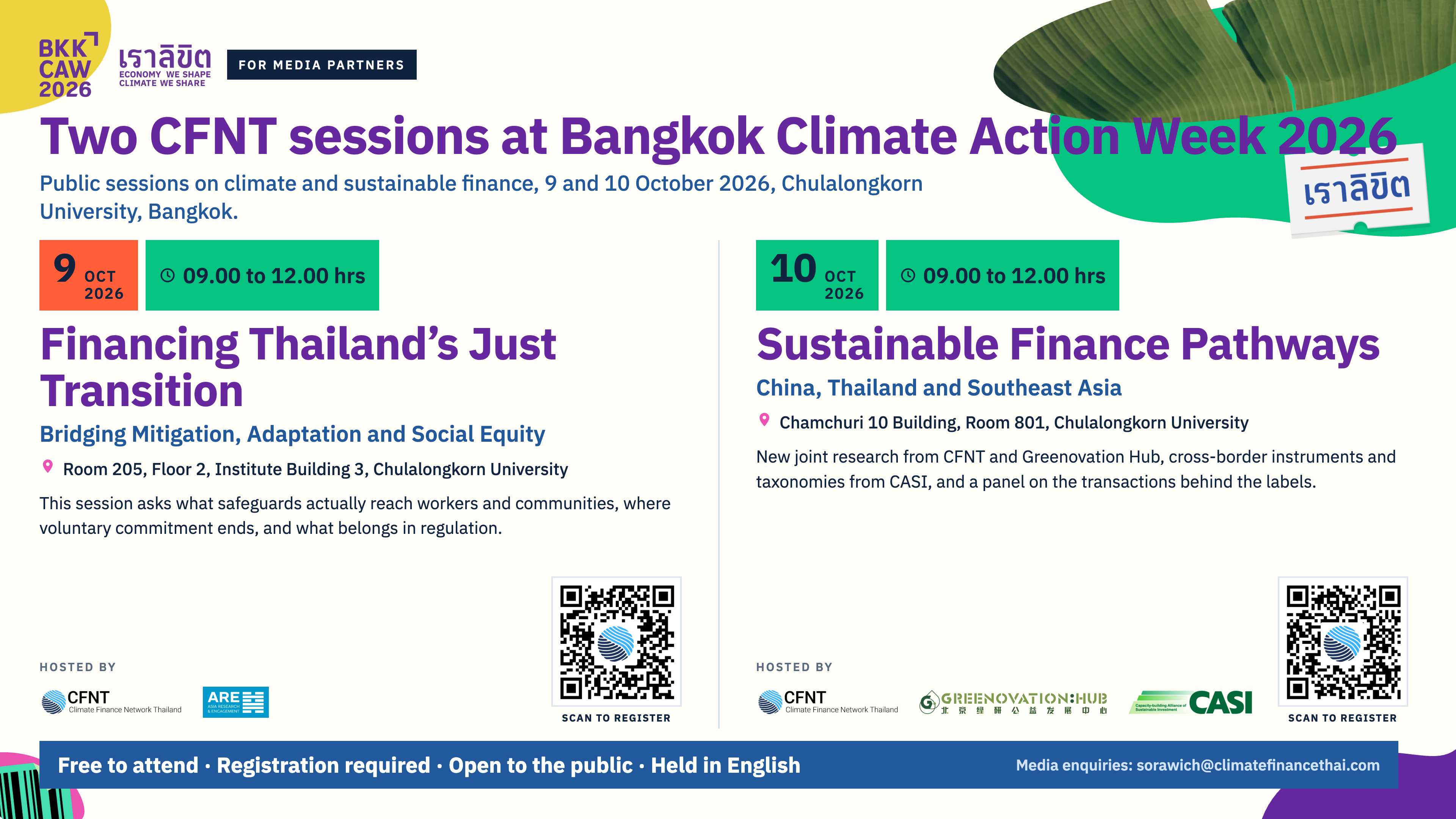
CFNT Hosted 2 Event During BKK CAW 2026
CFNT invites you to join our expert discussions at Bangkok Climate Action Week 2026. We will host two events on 9–10 October 202
Research Highlights
An Irresponsible Path to Net Zero: A Critique of Draft PDP 2026
Download the full analysis of CFNT’s critique on Thailand’s draft PDP2026.
CFNT Suggestion On Draft Climate Change Act Public Hearing
CFNT response to the third public consultation on the Thailand’s Draft Climate Change Act, drawing on the questions provided through the central legal consultation platform.

Financing Managed Coal-Fired Power Plant Phaseout in Thailand
CFNT Report examines the feasibility of early phased out for a coal-fired power plant and proposes financial structuring options to support a just and practical transition for key stakeholders.

Financing NDC 3.0: Challenges and Opportunities Toward Net Zero 2050
CFNT examines financing gaps between Thailand’s NDC 3.0 commitments and actual investment flows using CFNT’s Climate Finance Tracker, highlighting sectoral mismatches in priority technologies and opportunities to mobilize finance and accelerate Thailand’s path to net zero.
Climate Finance Policy Recommendations for Thailand’s New Government in 2026
As the effects of global warming increasingly and adversely impact Thai society and the economy, Climate Finance Network Thailand (CFNT) and Fair Finance Thailand (FFT) propose 10 financial and finance-related policies to drive Thailand’s just transition by addressing 3 key problem areas.
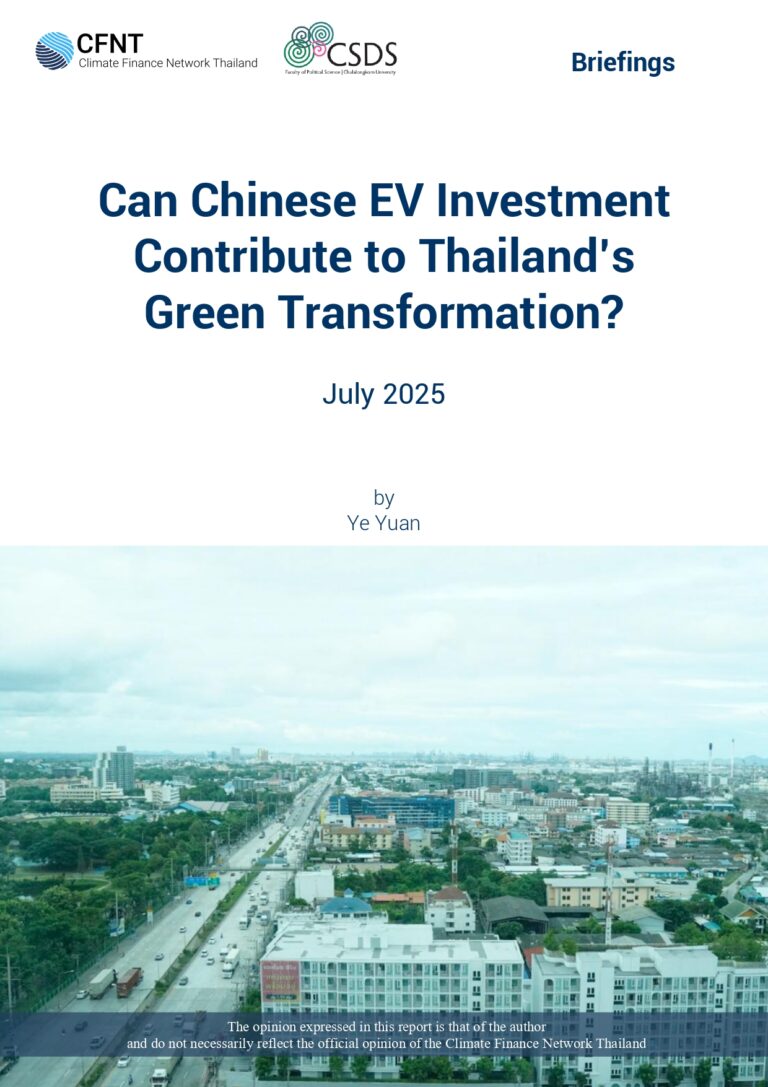
Can Chinese EV InvestmentContribute to Thailand’s Green Transformation?
This report examines the governance structures and local implications of Chinese electric vehicle investment in Thailand. It intends to provide an evidence-based reference point for policymakers and stakeholders in both countries, for future research, analysis, and action towards a more inclusive, trusted, and equitable form of sustainable development.
Articles
Time for Thailand to get out of the fossil trap and SMR pipe dream
Will Thailand’s draft PDP2026 deliver on its NDC 3.0 commitment? Sarinee Achavanuntakul, Director of CFNT, questions whether the plan can deliver, highlighting two key concerns: deeper fossil lock-in and overly optimistic assumptions about small modular reactors (SMRs).
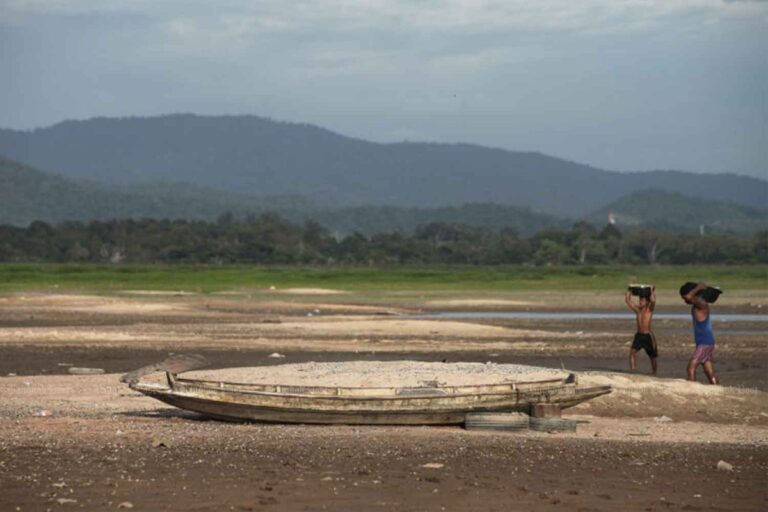
Parametric Insurance: An Umbrella for Thai Farmers as a Super El Niño Looms
How can Thai farmers prepare for a major El Niño expected later this year? One answer may be parametric insurance.
How Thailand Provincial Administrative Invest in Climate Mitigation
CFNT and Rocket Media Lab invite you to explore climate mitigation finance investment across Thailand’s provinces, drawing on data from the Thailand Climate Finance Tracker 2026.

How Major El Niño May Impact Water Resources in Thailand
Rapeepat Ingkasit, CFNT’s Research Consultant, examines how El Niño could affect Thailand’s water resources—and what that means for agriculture, industry and energy.
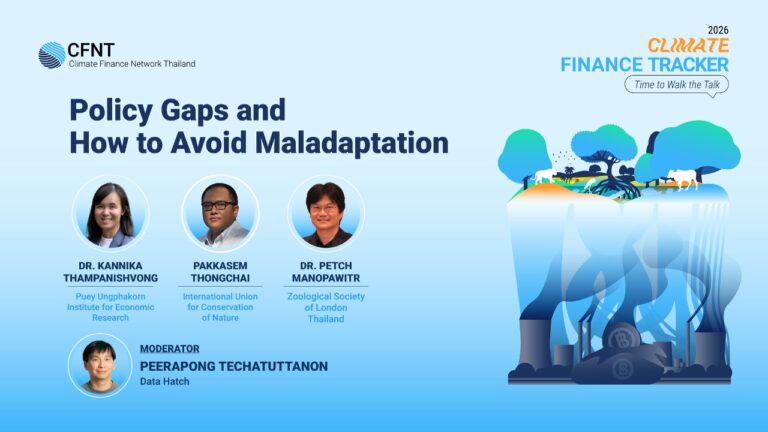
Panel Summary Policy Gaps and How to Avoid Maladaptation
Not every adaptation investment project leads to effectiveness, some may instead create a risk of “maladaptation.” Let explore the challenge of Thailand climate adaptation investment from panel discussion titled Policy Gaps and How to Avoid Maladaptation at the 2026 Climate Finance Tracker: Time to Walk the Talk.
How Thai Energy Companies Invested in Energy Transition
Rocket Media Lab and CFNT dig deep into Thai’s energy corporation invested in energy transition, drawing on the Thailand Climate Finance Tracker 2026 database.
Media
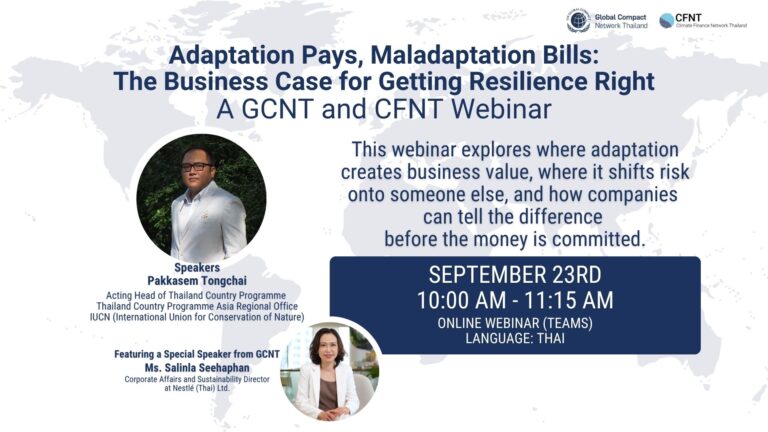
CFNT Webinar Series: Adaptation Pays, Maladaptation Bills: The Business Case for Getting Resilience Right
Recording of CFNT Webinar Series: Adaptation Pays, Maladaptation Bills: The Business Case for Getting Resilience Right
2026 Climate Finance Tracker: Time to Walk the Talk
CFNT presented Climate Finance Landscape 2026 during the “2026 Climate Finance: Time to Walk the Talk,” held on 23 July 2026.
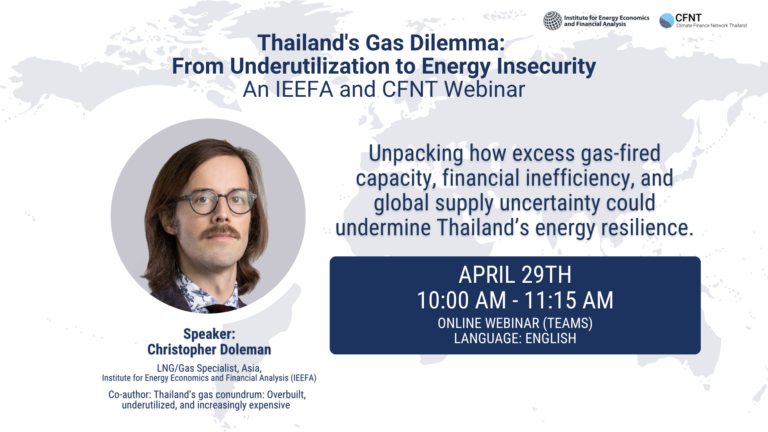
CFNT Webinar Series: “Thailand’s Gas Conundrum: Overbuilt, Underutilized, and Increasingly Expensive”
CFNT webinar recording “Thailand and Natural Gas: From Capacity Challenges to Energy Insecurity” featuring Christopher Doleman LNG/Gas Specialist, Asia, IEEFA and co-author of IEEFA’s new report, “Thailand’s Gas Conundrum: Overbuilt, Underutilized, and Increasingly Expensive”
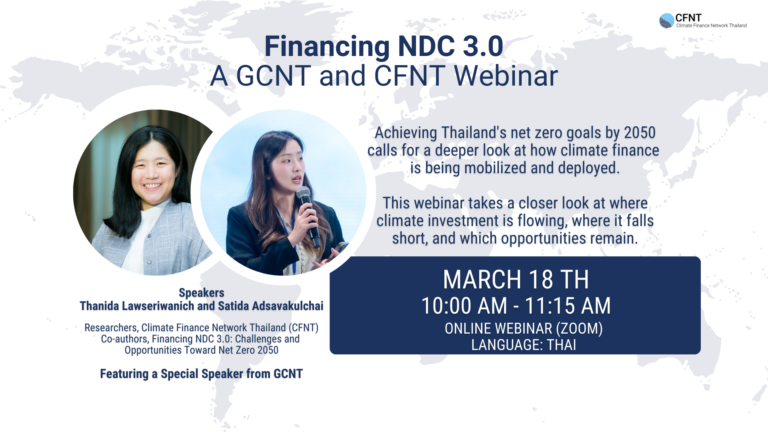
CFNT Webinar Series: Financing NDC 3.0
Video recording: “Financing NDC 3.0” featuring CFNT’s research team and speakers from UNGCNT.