
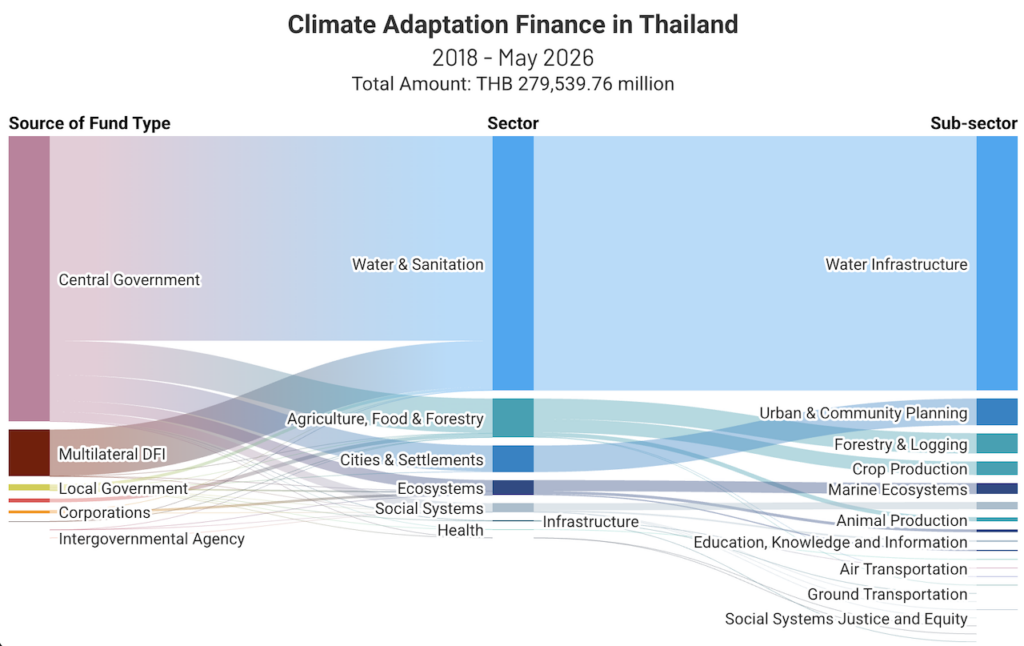
Data from the Thailand Climate Finance Tracker 2026, compiled by CFNT in collaboration with the Puey Ungphakorn Institute for Economic Research (PIER), show that Thailand invested approximately THB 279.5 billion in climate adaptation between 2018 and May 2026, roughly double the amount captured in the 2025 database, which covered 2020-2024.
Although funding for climate adaptation has continued to increase, not every project necessarily leads to effective adaptation. Some investments may instead create a risk of “maladaptation”: measures that reduce impacts in the short term but generate adverse consequences over the longer term.
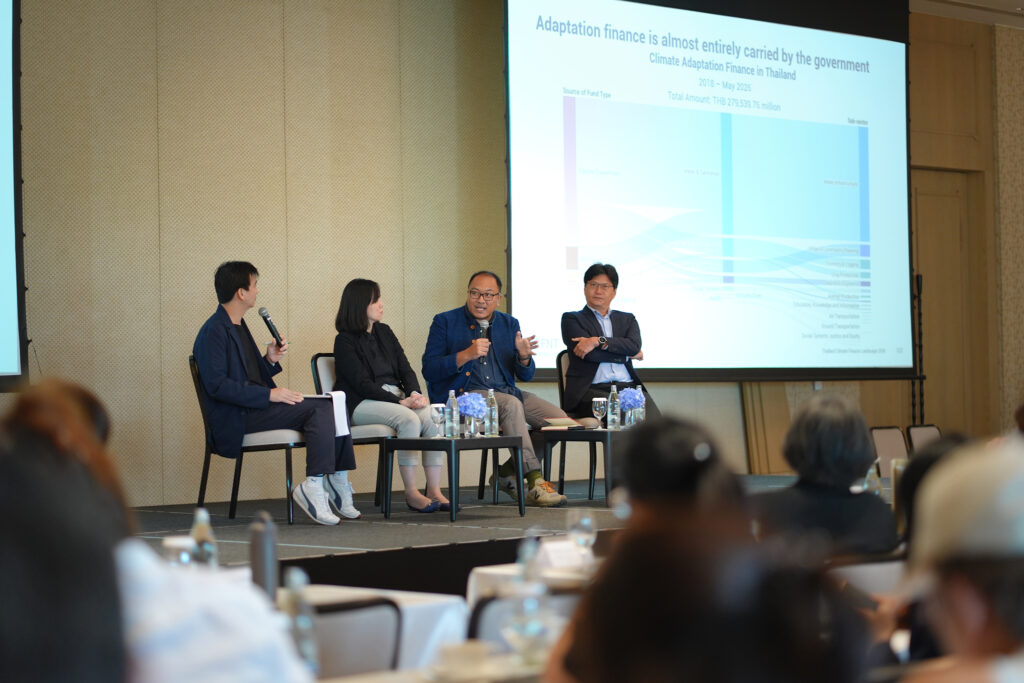
At the 2026 Climate Finance Tracker: Time to Walk the Talk event, held on 23 July, Climate Finance Network Thailand (CFNT) convened a panel discussion titled Challenges of Climate Adaptation Finance: Policy Gaps and How to Avoid Maladaptation, featuring:
- Dr. Kannika Thampanishvong, Research Director, Puey Ungphakorn Institute for Economic Research (PIER)
- Pakkasem Tongchai, Water and Wetlands Programme Officer, International Union for Conservation of Nature (IUCN)
- Dr. Petch Manopawitr, Advisor, Zoological Society of London Thailand (ZSL Thailand)
The panel explored the challenges of implementing climate adaptation projects, the definition and implications of maladaptation, and the policy gaps that need to be addressed to support more effective climate adaptation in Thailand.
PIER – The Challenges of Climate Adaptation Finance in Thailand
Dr. Kannika opened by presenting findings from global and Thai climate models, which point in the same direction: Thailand’s average temperature is expected to rise by the end of this century. Under the worst-case scenario, the country’s average temperature could increase by 3-4°C by the end of the 21st century. This could expose Thailand to more volatile, severe and complex weather conditions, including both floods and droughts within the same year, creating a major challenge for the design of water-management infrastructure.
“In the future, Thailand may face both droughts and floods within the same year. This will pose a major challenge for policymakers in designing adaptation measures and infrastructure that can respond to both hazards simultaneously,” Dr. Kannika said.
Dr. Kannika went on to say that rising global temperatures and climate change will have severe economic impacts. Between 2011 and 2045, climate change is projected to cause cumulative losses of THB 0.61-2.85 trillion to Thailand’s agricultural sector. Output of major crops, particularly rice, sugarcane and cassava, is expected to decline, further worsening the incomes of farmers who are already vulnerable. However, impacts will vary by location, with non-irrigated areas expected to be affected more severely than irrigated areas.
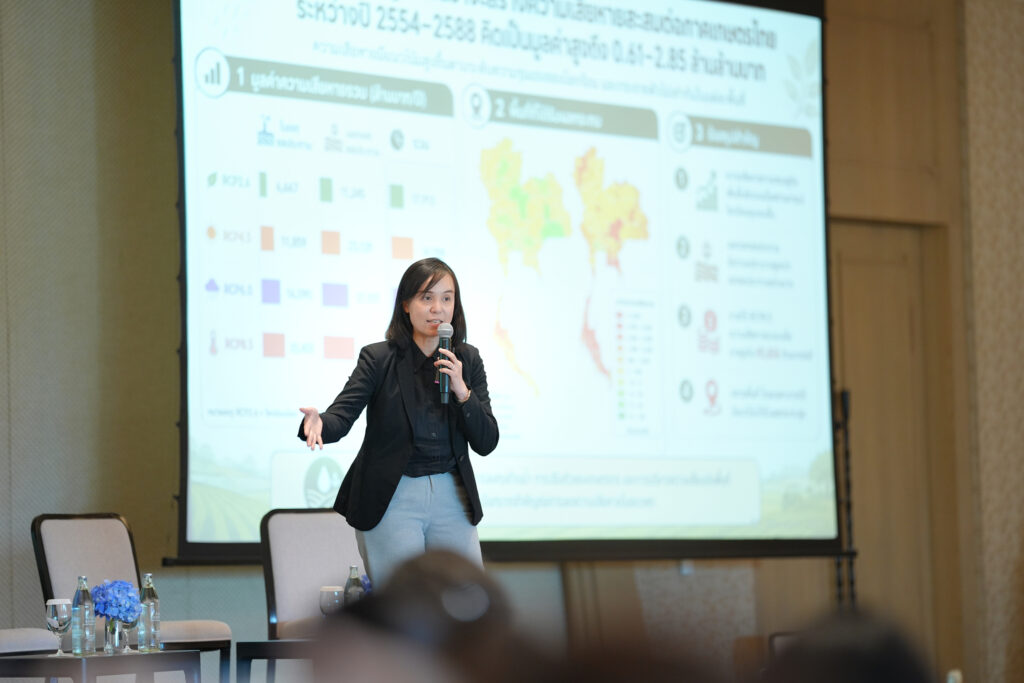
For vulnerable groups, more frequent floods and droughts can make it harder for children to access education, public health services and adequate nutrition. Higher temperatures and heatwaves are also expected to increase health risks for children and older people, in severe cases becoming life-threatening. Dr. Kannika expressed deep concern about the allocation of finance to address these challenges: data from the Thailand Climate Finance Tracker 2026 show that water management receives around three-quarters of total adaptation investment, while several other sectors, including public health, receive relatively little funding.
“Climate adaptation can take many forms, from developing climate-resilient crop varieties to improving coastal water management. Yet most funding today still goes to large-scale projects that do not address the needs of local communities and the people who live in those areas,” Dr. Kannika said.
Dr. Kannika highlighted two priorities for strengthening climate adaptation investment in Thailand.
First, Thailand needs to mobilize finance from other sectors. The country continues to face a substantial climate adaptation finance gap, while the public sector remains the dominant investor, accounting for more than four-fifths of total adaptation investment in Thailand. Thailand therefore needs to attract finance from the private sector, financial institutions, capital markets and international organizations to help fill this gap.
Second, Thailand needs to develop a more diverse range of climate adaptation projects across different sectors. Examples include crop-variety development and agricultural insurance, tourism destinations that are less dependent on weather conditions, and public-health preparedness for emerging insect-borne diseases.
IUCN – What Is Maladaptation?
Pakkasem began by describing climate adaptation as changes in the way people live in response to a changing climate. One example is flood-prone communities in Bangladesh shifting from raising chickens to ducks, which can swim. Adaptation can therefore take many forms and occur at different levels.
The critical question, however, is how effective those measures are. Some forms of adaptation can lead to “maladaptation”: actions that reduce impacts in the short term but create adverse consequences over the longer term. He grouped maladaptation into three forms:
- Adaptation through which vulnerability returns in the same or a new form
- Adaptation that benefits one area but adversely affects another
- Adaptation that creates other problems, which may not necessarily be climate-related

Pakkasem illustrated the first form with a floodwall built along one bank of a river in Bang Ban District, Phra Nakhon Si Ayutthaya. Water levels outside the wall increased, causing greater damage in adjacent areas. For the second form, he cited an irrigation embankment project in Ban Tha Yiam, Wang Luang Subdistrict, Selaphum District, Roi Et, which protected one village from flooding but shifted the flood impacts to Ban Na Wi, Si Wilai Subdistrict, Selaphum District, Roi Et. Some climate adaptation projects can create both the first and second forms of maladaptation at the same time, he added, including the concrete embankment along the Yom River in Sukhothai.
“The concrete embankment along the Yom River in Sukhothai is an example of maladaptation. It not only prevents water from flowing into wetlands but can also increase risks for nearby communities. Projects designed to reduce climate impacts can turn into maladaptation, create new vulnerabilities and shift risk onto others,” Pakkasem said.
Pakkasem also pointed to another problem associated with gray infrastructure: the “levee effect”, whereby gray infrastructure can increase flood risk over the long term. People may become complacent or place too much trust in such infrastructure, leading them to construct buildings or conduct agricultural activities closer to waterways. For example, riverside communities that once regularly adapted to flooding may become less able to cope with floods after such projects are introduced.
Pakkasem added that many people in Thailand live in areas exposed to climate risks, and their number is continuing to grow with support from multiple sectors, particularly through investment in gray infrastructure such as dams and floodwalls. The flooding in Hat Yai, Songkhla, has demonstrated that gray infrastructure may not genuinely reduce climate risk.
“Many people in Thailand currently live in flood-risk areas. One reason is the country’s reliance on gray infrastructure, which encourages people to live and expand further into floodplains. The flooding experience in Hat Yai, Songkhla, shows that gray infrastructure may provide flood protection, but it does not reduce risk over the long term,” Pakkasem said.
Pakkasem concluded with an important point: Thailand needs institutions with expertise in climate adaptation to assess which projects genuinely reduce vulnerability in local areas and determine how to address the ongoing consequences of maladaptation projects.
ZSL Thailand – Nature Positive: The Missing Dimension in Thailand
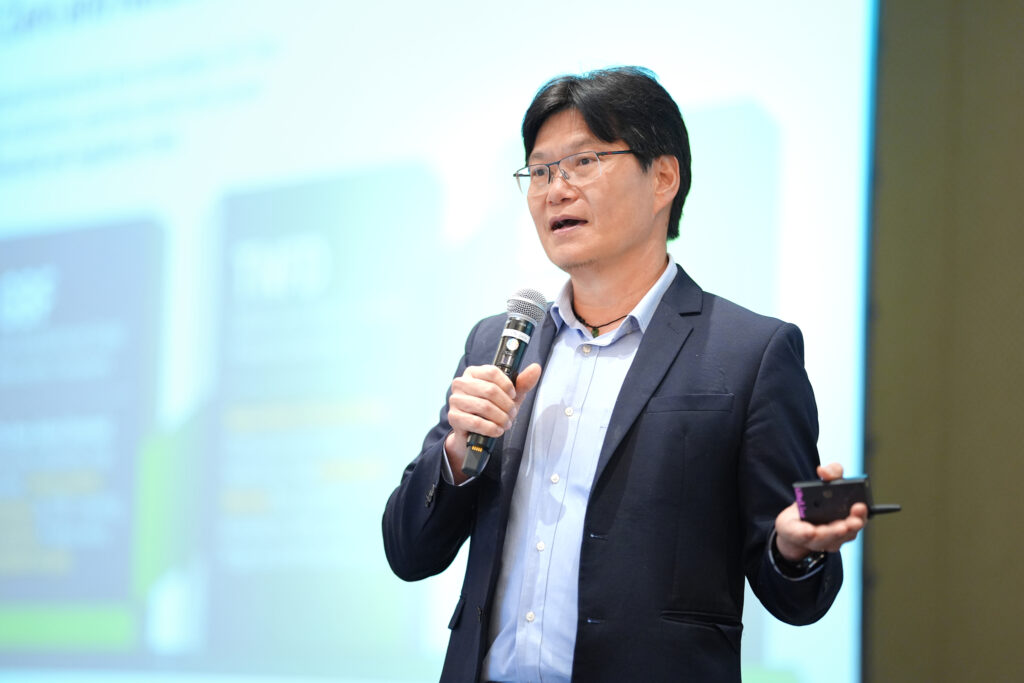
Dr. Petch began by expressing concern about climate adaptation in Thailand. Adaptation investment is almost ten times smaller than mitigation investment, while much of the funding is concentrated in water management. Other important sectors, such as public health and social development, justice and equity, receive almost no investment. Moreover, most funding continues to support gray infrastructure, which may not reduce climate risk over the long term.
“Many gray infrastructure projects contribute to ecosystem degradation and reduce resilience to climate change. Combined with climate impacts that are becoming more frequent and severe, this makes effective adaptation increasingly difficult,” Dr. Petch said.
In Dr. Petch’s view, Thailand faces two major gaps in its climate adaptation policy.
First, investment in biodiversity remains insufficient. Environmental restoration does more than absorb carbon; it also supports climate adaptation, for example by restoring natural water-retention areas. It can also stimulate the economy through a Nature Positive approach, in which economic development helps restore ecosystems to a healthier condition. Mangrove restoration, for example, provides an important natural carbon sink while making food sources more abundant and strengthening the fisheries sector.
Dr. Petch argued that Thailand still lacks indicators that integrate economic growth, quality of life and environmental impacts. As a result, many public projects are designed around a single purpose. Gray infrastructure, for example, may prevent flooding but at the cost of reducing natural water-retention areas.
“A major problem in Thailand is that we lack indicators that simultaneously encompass climate change, quality of life, economic growth and environmental restoration. We have yet to incorporate the Nature Positive approach into our indicators. As a result, most projects remain single-purpose, fail to reduce climate risk and often increase the vulnerability of marginalized communities,” Dr. Petch said.
Second, adaptation investment does not sufficiently reach vulnerable groups. Although Thailand’s NDC 3.0 identifies vulnerable groups such as children, young people and women as priorities, it does not set out a clear implementation framework or budget allocation. The social development, justice and equity sector also faces a substantial financing gap, receiving only THB 44 million of the country’s total adaptation finance.
“Thailand’s current climate investments may be shifting additional risk onto already vulnerable groups. Gray infrastructure designed to protect high-value economic areas can leave vulnerable communities outside urban centers facing greater impacts instead.” Dr. Petch said.
Dr. Petch also stressed the importance of greater private-sector participation in climate adaptation. He argued that Thailand should expand the Thailand Taxonomy, the country’s common framework for classifying environmentally sustainable economic activities, to cover social and biodiversity impacts.
He also called for financial instruments aligned with Nature Positive principles to redirect capital toward environmental restoration and greater resilience to climate change. The Zoological Society of London and Sal Forest Co., Ltd. are currently developing a prototype outcome-based bond that links payments to social and environmental outcomes.
Dr. Petch concluded with six recommendations:
- Develop methods for assessing maladaptation
- Develop comprehensive mapping of water systems and geographic areas across the country
- Integrate Net Zero and Nature Positive objectives into economic development criteria
- Review and strike a balance between gray and green infrastructure, and apply nature-based solutions to reduce climate impacts
- Expand channels for supporting vulnerable groups
- Design indicators that measure actual environmental and social impacts
The challenge for climate adaptation finance in Thailand may therefore not simply be to increase the volume of investment, but also to ask who benefits from that finance, where it is deployed, and whether it genuinely reduces vulnerability over the long term. If investment continues to focus on single-purpose solutions without accounting for ecosystems and inequality, projects designed to address climate change may themselves become part of a new set of risks.
For more information on Thailand Climate Mitigation Finance 2026, visit: https://www.climatefinancethai.com/tracker/mitigation
For more information on Thailand Climate Adaptation Finance 2026, visit: https://www.climatefinancethai.com/tracker/adaptation