
Thailand’s recent update to its Nationally Determined Contribution (NDC 3.0) was met with polite applause from diplomatic circles and global communities. By finally aligning the national net-zero target with the mid-century goals of our neighbours, the kingdom appears to be getting back on track.
However, experienced observers of Thai energy policy know that targets are easy to set but difficult to realise. A closer look at the Energy Sector Investment Needs and Prioritisation section reveals a roadmap that focuses on speculative technology over economic reality.
The current strategy relies heavily on future solutions such as offshore Carbon Capture and Storage (CCS), Small Modular Nuclear Reactors (SMRs), and hydrogen co-firing. While these technologies generate excitement at seminars, they are currently unproven at scale and prohibitively expensive.
Relying on them is not a sound strategy; it is betting. Furthermore, this approach is likely to create a new form of energy insecurity. It swaps our current reliance on Middle Eastern oil and gas for a future reliance on imported ammonia and hydrogen, leaving Thailand’s energy sovereignty vulnerable to external market shocks.
Economic imperative
Dear readers, despite the not-so-inspiring energy policy, I remain hopeful. Indeed, the government’s own documents serve as useful information that should have dictated the entire policy. When analysing the cost of CO2 abatement per tonne, the early phaseout of coal-fired power plants emerges as the cheapest option, in order to reduce emissions.
The mitigation potential is also high, estimated at 6 million tonnes of CO2-equivalent between 2030 and 2035. Notably, retiring coal power plants early is significantly more cost-effective than investing in small nuclear reactors, which are pricier. It is six times cheaper than offshore CCS and over 20 times cheaper than building hydrogen power plants. Despite the glaring benefits, the Thai government still lacks a concrete roadmap for phasing out existing plants, however.
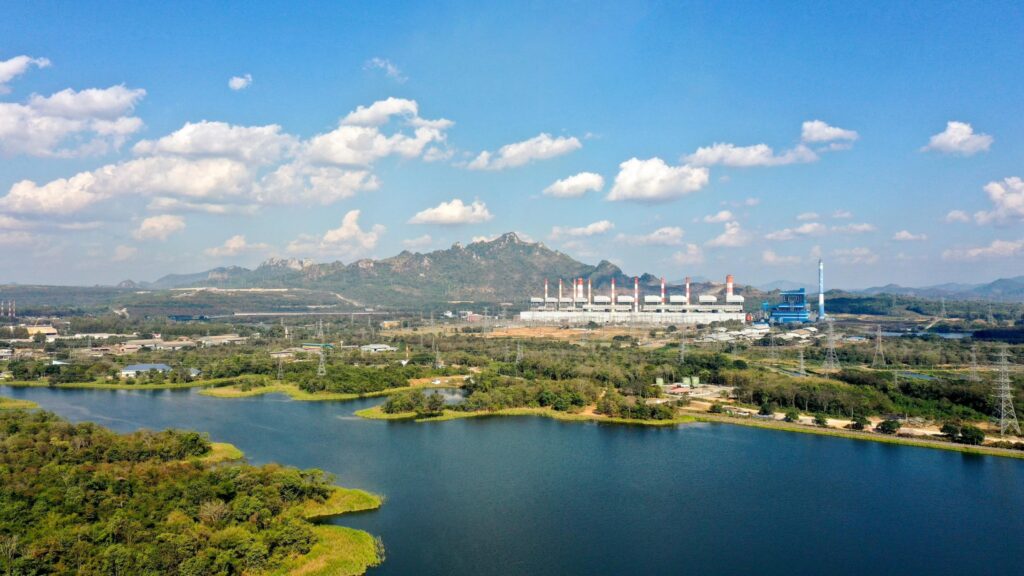
Today, coal supplies about 20% of Thailand’s electricity, with generation split between private independent producers and the state utility operated by the Electricity Generating Authority of Thailand (Egat).
Alarmingly, over two-thirds of Thailand’s coal plants continue to use subcritical combustion, a dated and highly inefficient technology that emits more carbon and consumes more water than modern alternatives like supercritical or ultra-supercritical systems.
But the real obstacle is financial, not technical. The Thai energy sector is straitjacketed by rigid Power Purchase Agreements (PPAs) that guarantee revenue to plant owners regardless of their operations.
For an investor, these plants represent reliable, contractually obligated cash flows. Shutting them down early without an appropriate transition strategy is economically irrational and acts against a board’s fiduciary duty.
This short-term and rigid mindset masks a larger systemic risk. The longer Thailand delays its exit from the high-emission source, the higher the risk of abrupt regulatory shifts or international trade penalties, such as the European Union’s Carbon Border Adjustment Mechanism (CBAM) imposed on some high-emission exported products, such as steel from Thailand, which will take effect on Jan 1.
Financial solutions
Fortunately, we are not the only ones struggling with this.
Germany passed a Coal Exit Law in 2020, aiming to shut down plants by 2038, using a reverse auction mechanism to compensate owners. However, Thailand may not have the fiscal leverage to emulate such large-scale government buyouts, especially since Moody’s downgraded the country’s credit outlook to negative in April.
Yet, we can still emulate practical financial engineering solutions successfully deployed by our peers in the Global South.
1. Refinancing and restructuring
We need not look far for a blueprint. In 2022, the Philippines’ ACEN Corp successfully spun off its 246 MW SLTEC coal plant into a special purpose vehicle (SPV). This transaction marked the world’s first market-based Energy Transition Mechanism (ETM), a concept developed by the Asian Development Bank. By refinancing the plant with long-term, lower-interest debt and bringing in institutional investors, they shortened the plant’s life by 15 years — moving the retirement date from 2055 to 2040 while still satisfying investors. It cleared ACEN’s balance sheet, freeing up capital to reinvest in renewables.
2. The coal-to-clean transition
If refinancing is insufficient, we can bundle the exit with the entry. Chile’s Tocopilla power station offers a compelling model. Engie Energía Chile utilised a results-based loan where the interest rate for a new 151MW Calama wind farm project was tied to their coal retirement schedule. If Engie shut down their coal units early, the interest rate on the loan dropped. This created a direct financial incentive, resulting in the closure of 334MW of coal capacity nearly two years ahead of schedule. The profit from the new wind farm effectively subsidised the loss of the old units.
3. Transition credits
Finally, there is the untapped value of avoided emissions. The logic is that by closing a plant early, you are performing a service to the world by preventing millions of tonnes of carbon from entering the atmosphere. By verifying these non-emitted tonnes, the project creates Transition Credits. These are currently being explored in the early phaseout of a 270MW coal plant in the Philippines. This mechanism opens an opportunity to put a monetary value on prevented future emissions, generating revenue that can help finance the costs of shutting down the coal plant.
Closing the policy gap
These strategies are not ready-to-wear. Our policymakers need to pick suitable features and tailor them to Thailand’s institutional and financial context. The banking sector is ready. Under the Task Force on Climate-related Financial Disclosures (TCFD), Thai banks have begun flagging fossil fuel exposure as high-risk lending.
Several institutions have pledged not to finance new coal projects and to gradually phase out existing coal-linked assets in their portfolio. Investors are seeking brown-to-green opportunities.
What is missing is a clear direction and a display of genuine political will from the top.
A reliance on hydrogen and carbon capture suggests a reluctance to confront the difficult reality of contract renegotiation. It is politically safer to promise future technology than to dismantle existing deals.
But true energy security requires pragmatic economics. Continuing to run subcritical coal plants while waiting for a hydrogen miracle is a luxury Thailand cannot afford. The cheapest path to net zero is staring us in the face. Other countries have shown that financing for a coal exit is possible.
Thailand has the policy groundwork, the financing access, and the technical capacity. What is missing is the plan and the political will to start.
