Thailand’s sustainable bond market (ESG Bonds) has grown exponentially, from just THB 23 billion in 2019 to THB 1.14 trillion (US$32 billion) by late 2026, accounting for around 6.1% of the country’s total bond market. Yet the substantial increase in fundraising does not always guarantee that the capital reaches projects that genuinely reduce greenhouse gas emissions, or that it is structured in a financially viable and risk-resilient way (bankable projects).
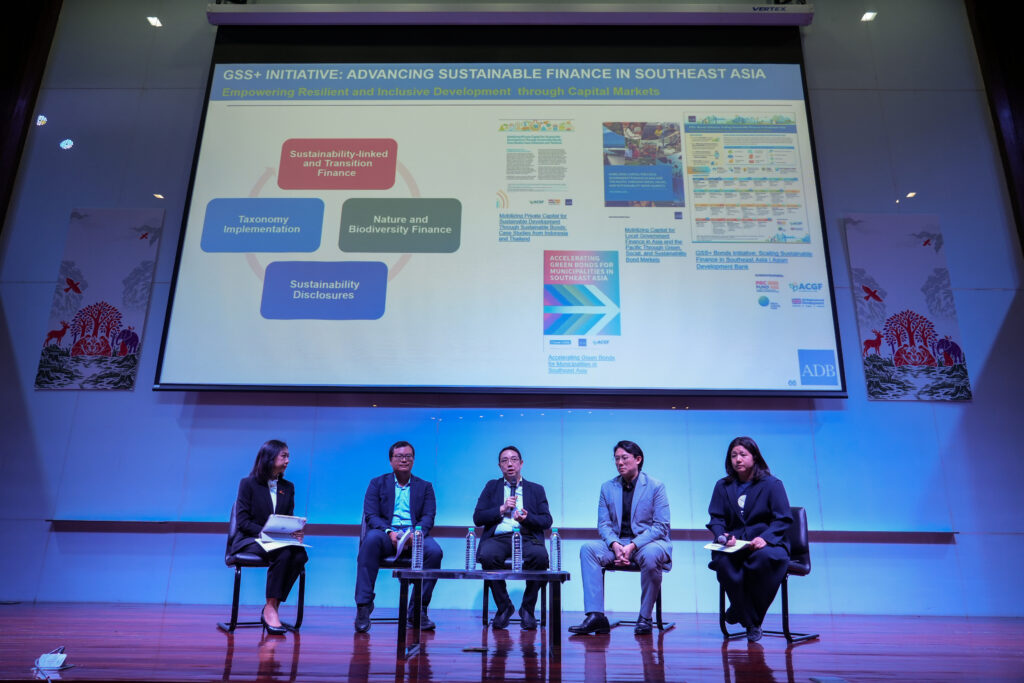
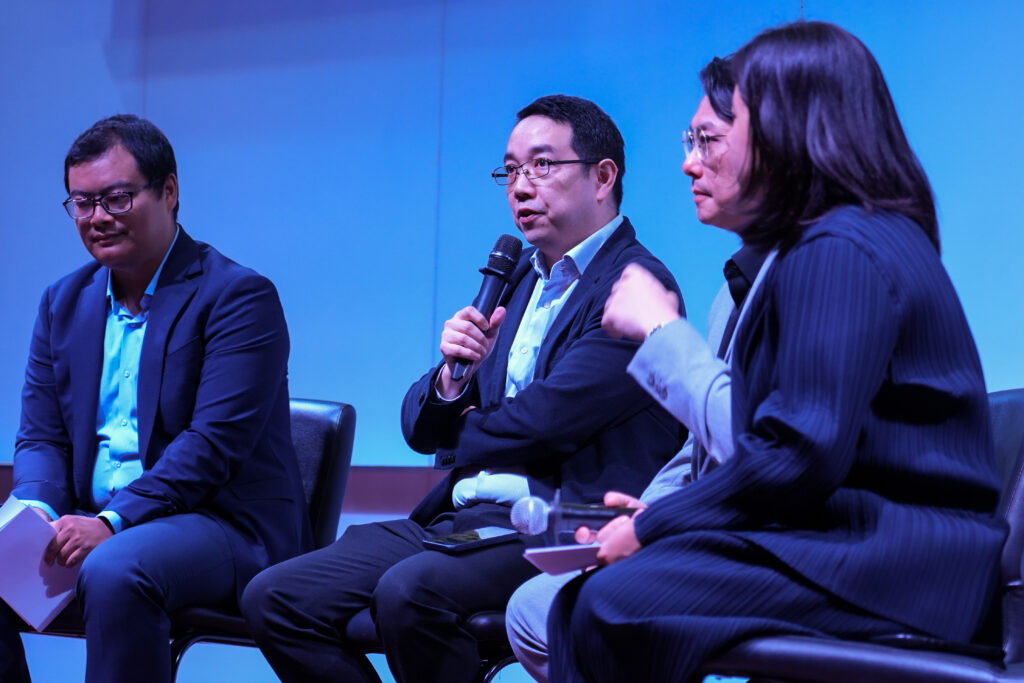
A panel discussion on scaling up the GSS+ bond market (Green, Social, Sustainability and Transition Bonds) brought together in-depth perspectives from four experts representing regulators, capital markets, development finance institutions and commercial banks:
- Asmaporn Panjanavaporn, Executive Vice President, Thai Bond Market Association (ThaiBMA)
- Wenhong Xie, Head of China Programme, Climate Bonds Initiative (CBI)
- Kosintr Puongsophol, Senior Economist, Asian Development Bank (ADB)
- Jason Lee, Head of Sustainability, CIMB Thai Bank
ThaiBMA: Strengthening the Ecosystem and Building Confidence in Thailand’s ESG Bond Market
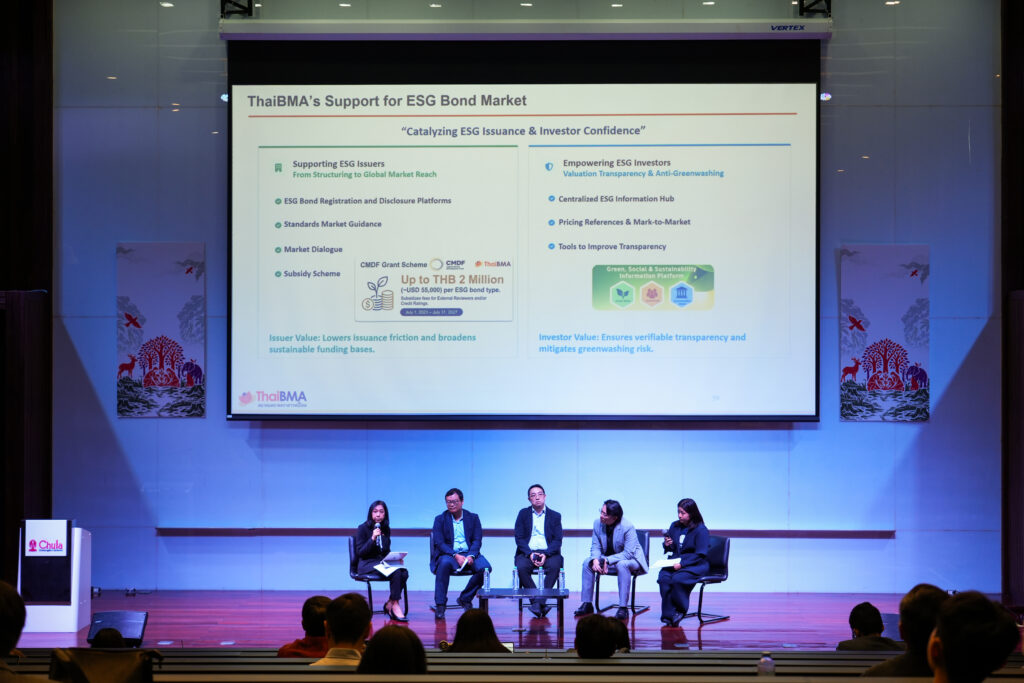
“ThaiBMA’s core mission is to foster a fair, efficient and sustainable Thai bond market. Enhancing market infrastructure, information transparency tools, reliable pricing benchmarks, and mechanisms that support ESG issuers will be vital to strengthening investor confidence.”— Asmaporn Panjanavaporn, Executive Vice President, Thai Bond Market Association (ThaiBMA)
Asmaporn pointed out that Thailand’s ESG bond market is currently led by the public sector and state-owned enterprises in terms of value, accounting for around 75%. The private sector, meanwhile, is represented by 37 companies, led by the energy, transportation and logistics sectors. Within the ESG bond segment, sustainability bonds make up 65% of the total, followed by sustainability-linked bonds at 32%.
To elevate and drive Thailand’s bond market forward, ThaiBMA fulfills five key roles: serving as a self-regulatory organization (SRO); acting as a Bond Information Center for both the primary and secondary bond markets; representing market participants by gathering their views and advocating policy initiatives on their behalf; producing and publishing bond reference prices that meet established standards and are accepted by market participants; and promoting bond market development and education.

ThaiBMA has continued promoting the growth of ESG bonds a priority. To support this effort, ThaiBMA initiate and proposed a grant scheme to the Capital Market Development Fund (CMDF), and continues to facilitate its implementation. The program will help cover external review and credit rating costs, with support of up to THB 2 million per eligible issuance. This helps reduce cost barriers for companies seeking to issue sustainable bonds.
As part of its efforts to strengthen Thailand’s bond market infrastructure, ThaiBMA has been drawing lessons from a study visit to China, where it exchanged knowledge and views with regulators and leading institutions such as NAFMII, CBPC & CBR, CCXI, and Jun He Law Firm. The visit focused on approaches to enhancing the effectiveness of its self-regulatory (SRO) functions, developing and expanding its bond pricing and information products, and strengthening investor protection mechanisms in the bond market.
Meanwhile, the Securities and Exchange Commission (SEC) of Thailand’s introduction of new fundraising instruments—Transition Bonds and Thailand Amber Bonds—under regulations that took effect on 16 September 2026, together with incentives including a waiver of filing fees through May 2027, will help businesses in hard-to-abate industries access transition finance in a systematic and efficient manner.

Climate Bonds Initiative: Focusing on Common Ground and Genuine Value Creation
“Do not focus solely on labels based on one country’s specific criteria. Focus instead on finding common ground and building genuine credibility, because the value of a green bond lies not in its label, but in measurable environmental impact.” — Wenhong Xie, Head of China Programme, Climate Bonds Initiative (CBI)
Wenhong reflected on a key obstacle facing issuers in the region: fragmented taxonomies and regulatory criteria across Europe, China and ASEAN. This increases reporting costs. The solution is to build interoperability, or a common ground taxonomy, so that cross-border institutional investors can participate. The market must also pay attention to transition finance and amber bonds, allowing hard-to-abate industries to raise adaptation finance in a standardised manner. These instruments must have ambitious targets and rigorous safeguards against greenwashing.
From the perspective of an international standard-setting organisation, CBI has contributed to the development of Thailand Taxonomy Phases 1 and 2, which cover new sectors such as manufacturing and aquaculture. It has also certified green bonds in Thailand since the early days, including the green component of government bonds for the BTS mass-transit project.
Wenhong also noted that although RMB-denominated Panda Bonds have attracted strong interest because their interest costs are lower than those of US dollar bonds, the growth of Green Panda Bonds still faces challenges. These include a shortage of pipelines of purely green projects, the absence of a clear green yield curve, and rigorous verification of KPIs against international standards.
Asian Development Bank: Building a Complete Ecosystem from Upstream to Downstream
“Sustainable finance cannot scale without a complete ecosystem, from enabling regulations and taxonomies that reflect local market realities to implementation support and strong partnerships that help issuers access sustainable finance at scale.” — Kosintr Puongsophol, Senior Economist, Asian Development Bank (ADB)
Kosintr presented ADB’s system-wide approach. At the upstream level, ADB has helped develop the ASEAN Taxonomy Promoting Sustainability, supported disclosure in line with international ISSB standards and built the capacity of local external verifiers.
At the downstream level, ADB has participated in financial structuring and syndication, leading to pioneering bond issuances in Thailand, including a Sovereign Sustainability-Linked Bond (Sovereign SLB) and the first private-sector Blue Bond. It has also promoted the participation of local administrative organisations in raising environmental finance at the community level.
ADB highlighted the achievements of the GSS+ Bonds Initiative, which has stimulated more than US$5 billion in sustainable bond issuance in ASEAN and aims to mobilise US$30 billion by 2030. Prominent examples in Thailand include the allocation of a US$150 million Blue Loan together with Bank of China, which paved the way for Thai Union’s private-sector Blue Bond issuance, and support for a THB 25 billion Sovereign SLB that links biodiversity targets through other effective area-based conservation measures (OECMs). The bond was oversubscribed by three times and was presented as a case study at global forums such as the CBD COP and COP31. ADB is also accelerating support for municipalities to build green fundraising from the ground up.

CIMB Thai Bank: Structuring Finance Carefully and Seizing Opportunities in Local-Currency Markets
“Do not take for granted that a green project will always be able to borrow or raise funds. Your financials must be robust, the financing structure must be well designed, and the impact must be demonstrated from the outset.” — Jason Lee, Head of Sustainability, CIMB Thai Bank
Jason shared the perspective of a commercial bank. He emphasised that the central challenge for businesses is not a lack of environmental ideas, but a lack of financially viable structures (bankability) and clear plans for measuring issue-specific impacts.
Jason also shared direct experience of fundraising through Panda Bonds, RMB-denominated bonds issued in China, with interest rates as low as approximately 1.98–2.48% compared with the US dollar market. He proposed a ‘5 Rs Framework’ for businesses interested in pursuing this route:
- Reason: Clearly define the purpose and plan for using RMB funds.
- Regulatory: Strictly comply with China’s Green Project Catalog criteria.
- Roadshow: Communicate in ways that build confidence among local investors.
- Realization: Manage foreign-exchange risk through an FX strategy.
- Repeatability: Plan continuous issuance to build long-term confidence.
As an active practitioner in commercial banking, CIMB has successfully raised a total of RMB 6 billion through Panda Bonds, achieving interest rates as low as 1.98%. It has managed these funds through a currency-swap strategy to distribute capital across the region. Jason also offered an important lesson on layering finance and on assessing alignment through a Venn diagram that brings together local taxonomies, the Common Ground Taxonomy and the EU Taxonomy. This can help companies upgrade an ordinary Panda Bond into a Green Panda Bond to attract international institutional investors, while engaging an external second-party opinion (SPO) provider from the outset to strengthen ESG credibility.
From Expanding Volume to Creating Genuine Impact
The key conclusion from this panel is clear: Thailand’s sustainable-finance market is moving beyond the phase of raising awareness and into a phase of implementation and measuring genuine impact.
The central challenge ahead is therefore not simply to increase the value of bond issuance as much as possible. It is to build connections between domestic and international standards, prepare accurate greenhouse gas data, and design financially viable structures so that every baht invested through ESG finance can genuinely and fairly move Thailand towards net zero.