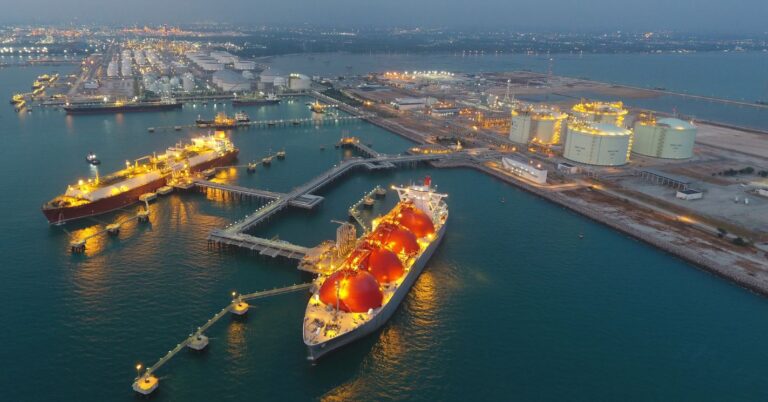
Iran war exposes Thai energy fragility
Iran war is once again challenging the global economy. For Thailand, however, it exposes something deeper -- an energy system that remains heavily dependent on imported LNG.

Iran war is once again challenging the global economy. For Thailand, however, it exposes something deeper -- an energy system that remains heavily dependent on imported LNG.
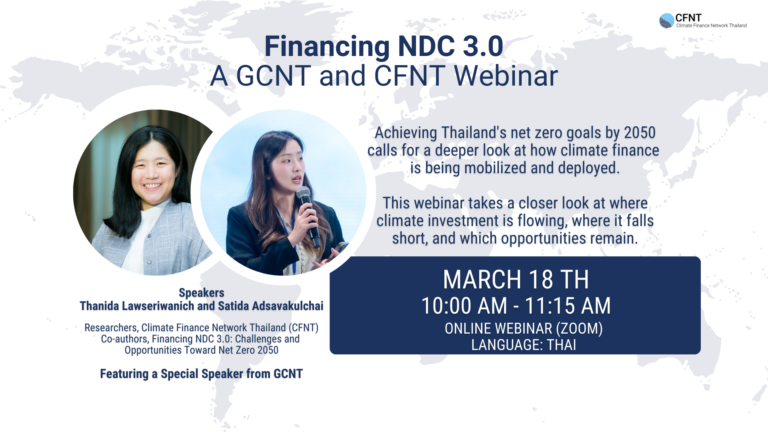
Video recording: "Financing NDC 3.0" featuring CFNT’s research team and speakers from UNGCNT.
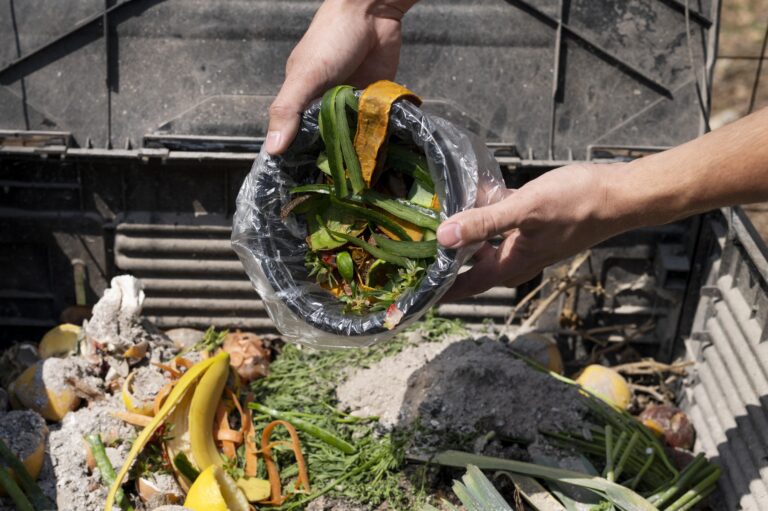
On paper, Thailand’s T-VER composting projects appear capable of delivering emission reductions close to the waste sector target under NDC 3.0—within a single year. In reality, the impact may be far smaller.
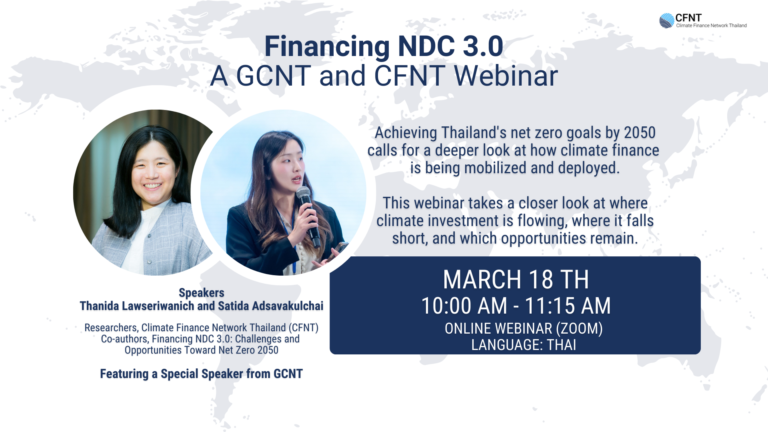
Thailand has recently demonstrated a major step forward in climate ambition through its NDC 3.0, to transition toward a net-zero society and economy by 2050. However, ambition alone is not enough. Climate Finance Network Thailand (CFNT), in collaboration with UN Global Compact Network Thailand (GCNT), invites you to explore these issues in our webinar “Financing NDC 3.0.”
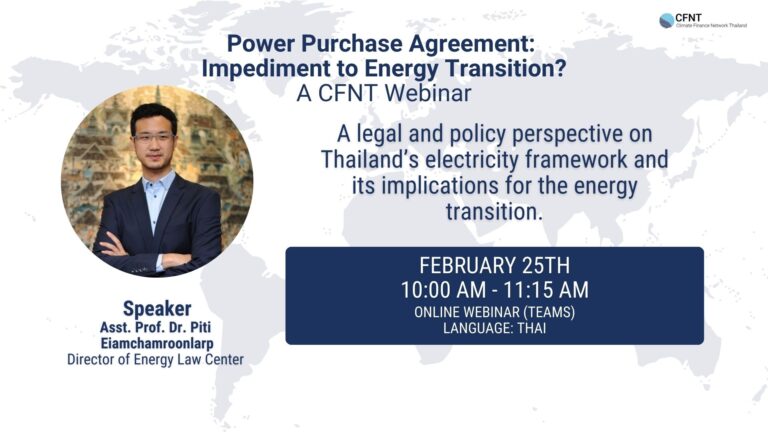
CFNT webinar “Power Purchase Agreement: Impediment to Energy Transition?”, featuring Dr.Piti Eiamchamroonlarp, Director of the Energy Law Center and Assistant Professor at the Faculty of Law, Chulalongkorn University.

CFNT Report examines the feasibility of early phased out for a coal-fired power plant and proposes financial structuring options to support a just and practical transition for key stakeholders.
CFNT invites you to our webinar, “Power Purchase Agreement: Impediment to Energy Transition?”, featuring Dr. Piti Eiamchamroonlarp

CFNT invites all members to join a special activity at Benjakitti Forest Park to explore Nature-Based Solutions (NbS) together with Arsomsilp.

CFNT examines financing gaps between Thailand’s NDC 3.0 commitments and actual investment flows using CFNT’s Climate Finance Tracker, highlighting sectoral mismatches in priority technologies and opportunities to mobilize finance and accelerate Thailand’s path to net zero.
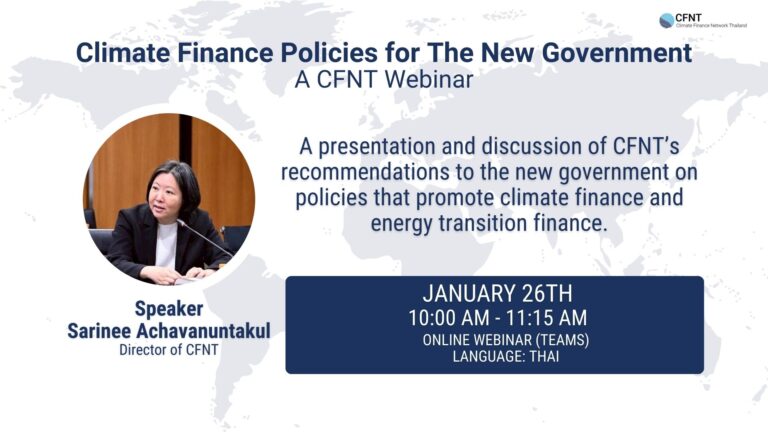
CFNT and Fair Finance Thailand (FFT) propose 10 climate finance policies for Thailand's new governmen, based on research conducted by both organizations